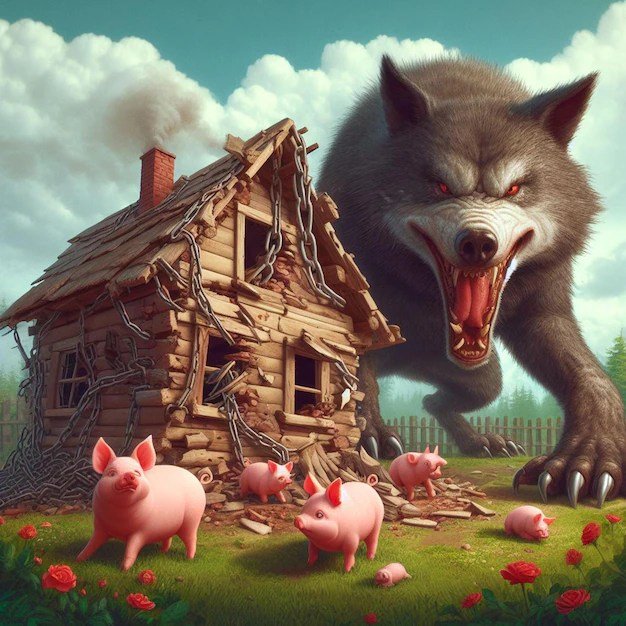
When you strip away the sing-song rhymes and whimsical drawings, the seemingly simple tale of "The Three Little Pigs" transforms into a profound psychological roadmap. This character analysis of the Pigs and the Big Bad Wolf isn't just about childhood villains and heroes; it's a timeless allegory for the human journey of self-discovery, resilience, and the universal struggle to build a strong, integrated self. At its heart, this fable offers a powerful lens through which to understand Jungian archetypes and the process of individuation.
At a Glance: Deconstructing the Swine and the Scoundrel
- The "Three Little Pigs" is more than a children's story: It's a rich allegory for psychological development and the journey to a mature self.
- Jungian Archetypes are key: Carl Jung's concept of universal patterns in the collective unconscious helps us understand the characters' deeper meanings.
- The Pigs represent stages of growth: From the immature, impulsive psyche (straw) to the developing individual (sticks), culminating in the fully integrated, resilient Self (brick).
- The Big Bad Wolf embodies the Shadow: This archetype represents our repressed, unconscious aspects—both the "bad" (aggression, primitive instincts) and the potentially "good" (untapped creativity).
- The Houses symbolize psychic defenses: They illustrate how our internal structures defend against both external pressures and internal, unconscious impulses.
- Individuation is the goal: The story guides us toward confronting our inner "wolf," integrating our Shadow, and building a strong, stable identity.
- Modern relevance: Failing to integrate the Shadow can manifest as anxiety, depression, and addiction, making the story's lessons more vital than ever.
Beyond the Fairy Tale: A Jungian Lens on "The Three Little Pigs"
From the moment children first hear "I'll huff, and I'll puff, and I'll blow your house down!", they encounter a narrative far richer than simple entertainment. "The Three Little Pigs," presented in a third-person omniscient perspective, paints the Big Bad Wolf as undeniably mean, tricky, and intent on harm. Phrases like "The wolf was furious, but he thought he would try another trick" solidify this view, portraying him as an external, malevolent force. Yet, other versions, like "The True Story of the Three Little Pigs," flip the script, offering a first-person perspective that reframes the wolf as misunderstood, highlighting how point of view dramatically shapes our understanding of "good" and "evil."
But for a true character analysis of the Pigs and the Big Bad Wolf, we turn to the foundational work of Carl Jung. As the founder of analytical psychology, Jung theorized that the human psyche harbors universal archetypes residing in what he called the collective unconscious. These innate, universal prototypes represent fundamental human motifs, forming a shared blueprint for human experience. This story isn't just a fable; it's a potent allegory for the process of individuation—the psychological journey of developing the Self—and, crucially, the integration of the Shadow archetype.
The Psyche's Evolution: Unpacking the Three Little Pigs
The three pigs are far more than barnyard animals; they embody different aspects and stages of the psyche's development, leading toward the ultimate goal of psychological maturity.
The First Pig: Naivety and the Flimsy Ego
Meet the first pig, the one who built his house of straw. In Jungian terms, this pig symbolizes the immature, undeveloped psyche. He's characterized by naivety, impulsivity, and a desire for instant gratification. His straw house represents the most primitive and fragile psychic structure, an ego so flimsy it's easily overwhelmed by unconscious impulses and external pressures.
Think of it as the early stages of childhood, where the ego structure is still forming, and one is easily swayed or destroyed by powerful emotions or external threats. There's a lack of foresight, a preference for ease over effort, reflecting a psyche yet to fully reckon with the demands of reality or the lurking dangers of the unconscious.
The Second Pig: Early Development and Fragile Defenses
The second pig, choosing sticks for his abode, signifies a slightly more advanced stage of psychological development. This isn't full maturity, but perhaps early adulthood—a period where one has moved past pure impulsivity but still possesses a fragile ego structure. The stick house, while an improvement over straw, remains vulnerable. It can withstand a bit more pressure but ultimately collapses under sustained assault.
This stage reflects a developing awareness of the need for some form of defense, some structure, but it's not yet robust enough to integrate deeper psychological challenges. There's a step toward responsibility, but the underlying psychological framework isn't fully solidified. It's a common phase where we might build temporary solutions, only to find them insufficient when truly tested.
The Third Pig: The Mature, Integrated Self
The third pig, meticulously constructing his house of brick, represents the pinnacle of this psychological journey: the mature, fully individuated Self. This is the individual who has diligently confronted the Shadow, integrated unconscious contents, and developed a strong, stable identity. The brick house symbolizes an integrated sense of self, resilient to both internal turmoil and external challenges—a fortress built through self-discovery and inner growth.
This pig's actions—planning, hard work, and foresight—reflect a conscious commitment to psychological development. He doesn't shy away from effort. His strong psychic structure means he's not easily swayed by the "huffs and puffs" of life, symbolizing a psyche capable of holding its ground, processing difficulties, and maintaining its integrity. His ultimate triumph over the wolf is a testament to the power of a well-integrated Self.
Confronting the Inner Monster: The Big Bad Wolf as the Shadow Archetype
Now, let's turn our attention to the star antagonist of this character analysis: The Big Bad Wolf. He isn't just a hungry predator; in Jungian terms, the wolf profoundly embodies the Shadow archetype.
The Shadow represents the unconscious, repressed aspects of the personality. These include qualities we deem undesirable—aggression, primitive instincts, anger, greed, jealousy—those parts of ourselves we deny, hide, or project onto others. The wolf's predatory nature, his trickery, and his destructive impulses are all manifestations of this raw, untamed Shadow material. He threatens the ego's fragile structures, representing the potentially overwhelming forces within our own unconscious.
However, it's crucial to understand that the Shadow isn't purely "bad." It also contains positive qualities and creative potential—untapped strengths, spontaneity, and instinctual wisdom that we might have repressed. Imagine the wolf's fierce drive channeled into a productive endeavor. The challenge, as the story illustrates, isn't to annihilate the Shadow, but to confront and integrate it. Jung himself noted the profound difficulty of this task: "The shadow is a moral problem that challenges the whole ego-personality, for no one can become conscious of the shadow without considerable moral effort." The third pig's ability to not only withstand the wolf but also trick him into the boiling pot symbolizes this conscious confrontation and eventual integration, leading to greater wholeness and psychological balance.
Building Your Inner Fortress: The Symbolism of the Houses
Beyond merely being shelters, the houses in the story are powerful symbols of our different levels of psychic structure and defense mechanisms. They reveal how we protect our delicate inner world from both external threats and the formidable forces of our own unconscious.
- The Straw House: This represents the most primitive and fragile psychic structure, common in early childhood. It's a psyche easily overwhelmed by unconscious impulses and external pressures, lacking robust coping mechanisms. If your internal house is made of straw, any significant "huff and puff" from life or your own repressed emotions can shatter your sense of self.
- The Stick House: While an improvement, the stick house still signifies a vulnerable psychic structure, often seen in adolescence and early adulthood. There's a developing ego, but it's not yet fully resilient. This structure might withstand minor stresses but can falter under more significant psychological challenges, indicating a self that's still forming its deeper resilience.
- The Brick House: This is the ultimate goal of individuation—a strong, integrated sense of self. The brick house symbolizes a psyche that is resilient to internal and external challenges, forged through self-discovery, inner growth, and the hard work of integrating unconscious contents. It's a secure foundation from which to navigate the world, representing psychological stability and true inner strength. This is where you want to live.
The Real-World Impact: Unintegrated Shadow in Modern Life
The journey of the three little pigs isn't just ancient wisdom; it's strikingly relevant in our contemporary world. Many individuals today struggle profoundly with unintegrated Shadow material, even if they don't call it that. This often manifests as anxiety, depression, and addiction. For instance, the World Health Organization (WHO, 2021) reports that over 264 million people globally are affected by depression, and an estimated 284 million by anxiety worldwide (Ourworldindata.org, 2018). These pervasive mental health challenges can often stem from a disconnect with or repression of uncomfortable aspects of ourselves, leading to internal conflict and psychological imbalance.
The "Big Bad Wolf" isn't always an external threat; more often, it's the internal critic, the unacknowledged rage, the denied vulnerability, or the repressed trauma that "huffs and puffs" at our fragile psychic structures. The story offers a timeless roadmap for confronting and integrating this Shadow, ultimately guiding us toward building a strong, resilient self that can withstand life's inevitable storms. For more context on such timeless narratives, you can Explore The Three Little Pigs and its enduring legacy.
AI as a Complementary Guide in Self-Discovery
In our modern quest for self-understanding, even artificial intelligence models can play a surprisingly valuable, albeit complementary, role in Jungian analysis and self-discovery. Imagine AI as a non-judgmental mirror, reflecting your thoughts and feelings back to you, often providing novel perspectives from its vast knowledge base. This can aid in self-awareness, helping you articulate unconscious thoughts or spot patterns you might otherwise miss.
However, it's crucial to remember that AI is not a replacement for human therapists and analysts. The profound, empathic, and dynamic therapeutic relationship is central to the individuation process—it's where true healing and growth occur through genuine human connection and nuanced guidance. AI can be a tool, a prompt, a reflecting surface, but the journey of integrating your Shadow and developing your Self ultimately requires conscious human effort and, often, human support.
Timeless Echoes: Universal Archetypes Across Cultures
The archetypes found in "The Three Little Pigs"—the naive innocent, the developing self, the integrated hero, and the formidable Shadow—are not unique to this single fairy tale. They are universal, appearing in myths and literature across cultures and throughout history, reflecting shared human struggles and triumphs.
Consider the Sumerian epic of Gilgamesh, who confronts his mortality and the wild man Enkidu (a form of his own untamed Shadow) to achieve wisdom. Or Arjuna, in the Bhagavad Gita, wrestling with profound doubts and his own moral dilemmas on the battlefield—a confrontation with his internal Shadow before embracing his dharma. Even the knights of Arthurian legend embark on quests that demand they face their fears, temptations, and inner demons, symbolizing their own encounters with the Shadow. These stories resonate because they tap into a collective human experience, offering models for navigating the inner landscape.
Your Journey to Wholeness: Integrating Your Inner Wolf
The ultimate takeaway from this deep dive into the character analysis of the Pigs and the Big Bad Wolf is profoundly personal. The story highlights that the path to psychological wholeness isn't about escaping challenges, but about confronting the "Big Bad Wolf" within yourself. It's about acknowledging, understanding, and ultimately integrating your own Shadow—those disowned parts of your personality that, left unchecked, can wreak havoc.
This means asking yourself:
- Where are you building a "straw house" in your life, seeking instant gratification instead of sustainable strength?
- Are there "stick houses" in your psyche, areas where you've made some effort but remain vulnerable to deeper challenges?
- What does your personal "Big Bad Wolf" look like? Is it anger, fear, addiction, self-sabotage, or something else?
- How can you begin the hard, conscious work of building your "brick house"—cultivating a strong, integrated sense of self that can truly stand firm?
The journey requires considerable moral effort, self-awareness, and a willingness to look at the parts of yourself you'd rather ignore. But, as Jung wisely noted, "The privilege of a lifetime is to become who you truly are." By understanding the timeless lessons of the three little pigs and their formidable adversary, you gain a powerful framework for your own journey toward individuation and a truly resilient life.