Remember that pure, unadulterated joy on a child's face when they proudly present a lopsided, glitter-covered creation? Or the focused silence as tiny hands carefully glue two pieces of paper together? Engaging in creative crafts and activities with kids isn't just about keeping them busy; it's about unlocking imagination, building foundational skills, and forging unforgettable memories. From the simplest sensory play for toddlers to more complex projects for older children, the world of Creative Crafts & Activities for Kids offers a treasury of benefits that extend far beyond the art table.
As a parent or caregiver, you're not just supervising; you're facilitating a playground for development, a space where every blob of paint and every snip of the scissors is a step forward. This guide will walk you through age-appropriate ideas, clever hacks, and expert tips to make crafting a joyful, stress-free experience for everyone involved.
At a Glance: Why Dive into Creative Crafts?
- Boosts Development: Enhances fine motor skills, hand-eye coordination, and problem-solving abilities.
- Sparks Imagination: Encourages creative thinking, storytelling, and self-expression.
- Strengthens Bonds: Provides quality family time and shared experiences.
- Busts Boredom: Offers engaging alternatives to screen time and keeps kids entertained.
- Budget-Friendly: Many projects utilize everyday household items and recyclables.
- Fun for All Ages: Activities can be adapted for toddlers to teens, and even adults!
The Unseen Magic: More Than Just Glitter and Glue
At its core, inviting children into the world of creative crafts isn't merely about the cute outcome; it's a powerful tool for holistic development. Think of it as stealth learning, where fun is the primary driver, but a multitude of essential skills are being honed simultaneously.
When a child manipulates play dough, they're not just squishing; they're developing finger strength and dexterity crucial for writing. When they decide which color to use next, they're making choices and exploring cause and effect. And when they proudly show off their "masterpiece," they're building self-esteem and confidence. These are the soft skills that don't always show up on a report card but are invaluable for navigating school and life.
Crafting also serves as a fantastic boredom buster, offering a refreshing break from screens and passive entertainment. It encourages active engagement, critical thinking, and a sense of accomplishment that a video game simply can't replicate. It transforms "I'm bored" into "What can we create?"
Crafting for Every Stage: Age-Specific Wonders
Matching the activity to your child's developmental stage is key to keeping frustration at bay and enjoyment high. We've broken down creative crafts into categories that cater to evolving skills and attention spans.
Toddler Time (Ages 1-3): Sensory Exploration & First Strokes
For the littlest hands, crafting is all about discovery through the senses. Safety is paramount, so focus on non-toxic, taste-safe materials and activities that require minimal precision. The goal here isn't a perfect product, but rather the experience of touching, squishing, and exploring.
- Finger Painting Fun: Simple, messy, and utterly delightful. Use washable paints on large sheets of paper. It’s excellent for sensory input and developing hand-eye coordination.
- Handprint Animals: A classic for a reason. Press a painted hand onto paper, then add simple features (eyes, ears, beaks) with markers after the paint dries to transform it into a bird, a fish, or even a whimsical creature from The Three Little Pigs!
- Play Dough Play: Store-bought or homemade, play dough is fantastic for strengthening tiny hand muscles. Add safe tools like plastic cutters, rolling pins, or even natural items like leaves and twigs.
Preschool Play (Ages 3-5): Snip, Stick, & Imagine
As fine motor skills develop, preschoolers are ready for activities that involve more purposeful movements like cutting and gluing. Their imaginations are blossoming, making projects that transform everyday items into fantastical creations especially appealing. Supervise closely with scissors, teaching proper handling.
- Paper Plate Animal Masks: Cut out eyeholes from a paper plate, then let your child go wild adding construction paper ears, yarn whiskers, and colorful paint to create their favorite animal.
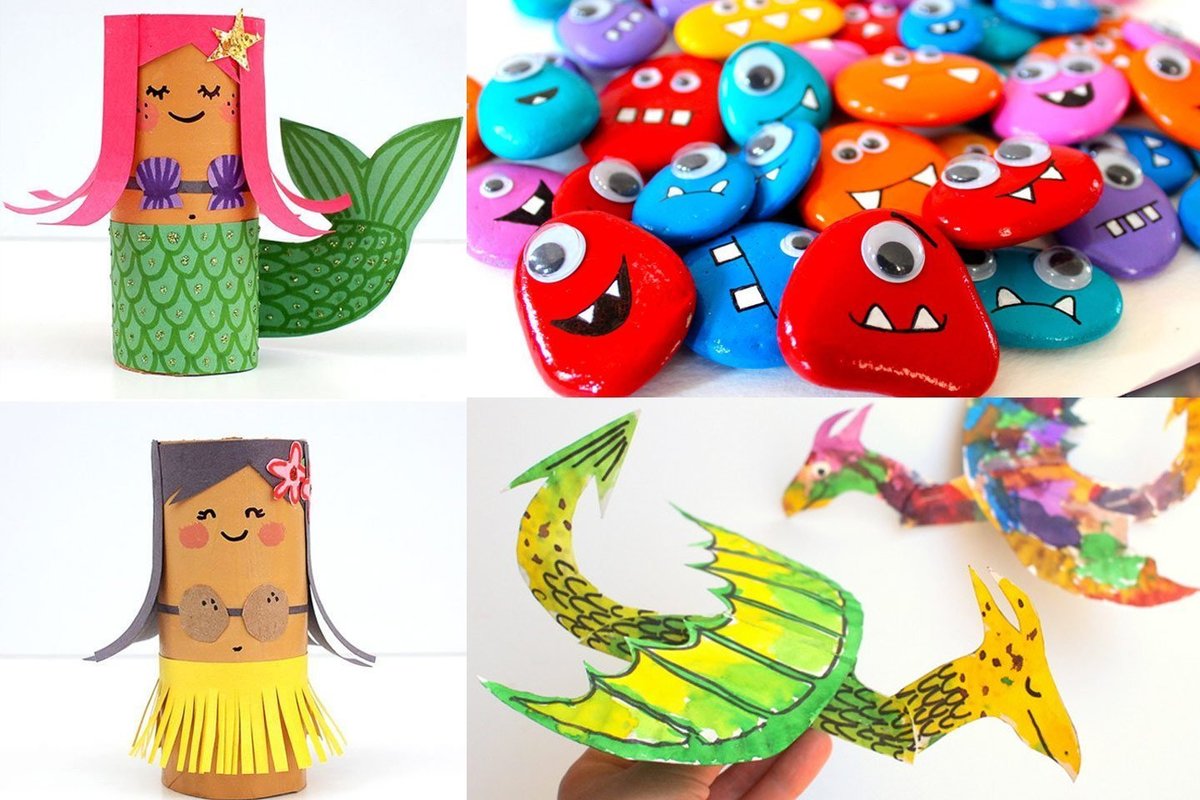
- Toilet Roll Characters: Empty toilet paper rolls are a treasure trove! Paint them, glue on googly eyes, yarn hair, and fabric scraps to bring charming characters to life. This is a wonderful way to encourage imaginative storytelling.
- Collage Creations: Provide a variety of materials—fabric scraps, magazine cutouts, feathers, buttons (larger ones for safety), and glue sticks. Let them arrange and glue to create a textured masterpiece.
Early Elementary Explorers (Ages 5-8): Following Steps, Finding Independence
At this age, children can follow multi-step instructions and use tools more independently. They enjoy projects with a clear goal and can handle a bit more complexity. This is also a great time to introduce basic crafting techniques.
- DIY Slime Creations: The ultimate sensory science experiment! There are countless recipes using glue, borax, baking soda, and contact solution. Kids love customizing with glitter, food coloring, and small toys.
- Rock Painting Pets: Collect smooth rocks and transform them into adorable pets using acrylic paints. Add features like eyes, spots, and whiskers. Once sealed, they make charming garden decorations or paperweights.
- Pipe Cleaner Animals: Pipe cleaners are incredibly versatile. Twist and bend them into all sorts of animals, insects, or abstract sculptures. Add beads for eyes or small pom-poms for extra flair.
Crafty Older Kids (Ages 8+): Complex Creations & Lasting Projects
Older children are often ready for projects that require more patience, intricate steps, and longer commitment. They enjoy learning new techniques and creating items they can use, wear, or gift. This is where their unique personalities really shine through in their creations.
- Friendship Bracelets: Using embroidery floss, kids can learn various knotting patterns to create colorful bracelets to share with friends. This teaches pattern recognition and sustained effort.
- DIY Bath Bombs: A fun, slightly scientific project that yields a usable product. Using baking soda, citric acid, essential oils, and food coloring, kids can mix, mold, and create their own fizzy bath treats.
- Paper Mache Art: Create masks, bowls, or sculptures by layering paper strips dipped in a paste over a base. Once dry, they can be painted and decorated, offering a robust, multi-session project.
- Simple Sewing Projects: Introduce basic hand-sewing with felt. Kids can make simple stuffed animals, pouches, or keychains, learning stitches like running stitch and whip stitch.
Beyond the Age Bracket: Craft Categories for Every Mood
Sometimes you're looking for a seasonal theme, a quick activity, or a project that secretly teaches science. These categories offer flexible options for any day.
Seasonal & Holiday Sparks: Connecting with Nature and Celebrations
Crafts are a wonderful way to mark the changing seasons and celebrate holidays, fostering an appreciation for the natural world and cultural traditions.
- Leaf Printing (Fall): Collect fallen leaves, paint one side with tempera paint, and press it onto paper for beautiful, natural prints. Explore different leaf shapes and colors.
- Paper Snowflakes (Winter): A timeless classic that’s surprisingly intricate and requires fine motor control. Fold paper and snip away to reveal unique designs.
- Nature Collages (Any Season): Gather twigs, pebbles, flowers, seeds, and leaves on a nature walk. Arrange and glue them onto cardstock for a beautiful, organic art piece.
- Handmade Cards: For any holiday or just because, making cards is a thoughtful way to engage kids in expressing affection. Provide various papers, stickers, glitter, and markers.
Quick & Easy / Low-Mess Marvels: For Busy Days or Tidy Spaces
Not every day calls for a full-scale art explosion. These activities are perfect for when time is short, patience is thin, or you simply want to avoid a major cleanup.
- Washi Tape Picture Frames: Provide plain cardboard or wooden frames and a selection of colorful washi tapes. Kids can tear and stick the tape to decorate the frames, a great low-mess option.
- Sticker Art & Sticker By Number: Stickers are fantastic for developing fine motor skills and creativity. Let kids create scenes, patterns, or follow "sticker by number" kits.
- Coloring Activities: From coloring books to printable sheets, coloring remains a simple yet effective way to relax and engage creatively. Provide a range of coloring tools—crayons, markers, colored pencils.
- Paper Folding (Origami for Beginners): Simple origami like fortune tellers or paper boats requires focus and following instructions, with minimal mess.
- Stringing Beads: Large beads and pipe cleaners or yarn are excellent for developing fine motor skills and pattern recognition. Toddlers benefit from large, chunky beads; older kids can tackle smaller ones.
Sensory Surprises: Engaging All the Senses
Sensory activities are particularly beneficial for younger children, as they learn about the world through touch, sight, and sometimes even sound and smell. They engage the hands and spark the imagination.
- Stretchy Doughs & Slimes: Beyond traditional play dough, explore recipes for cloud dough, moon sand, or kinetic sand for different textures.
- Squishy Toys (DIY Stress Balls): Fill balloons with flour, sand, or water beads for a satisfyingly squishy toy.
- Glittery Jars (Calm Down Jars): Combine water, glitter glue, and extra glitter in a sealed jar. Watching the glitter swirl can be mesmerizing and calming.
Science & STEM Adventures: Learning Through Play
Who says crafts can't be educational? Incorporate learning through hands-on experiments that often result in a cool creation.
- Bubbling Reactions (Volcanoes): The classic baking soda and vinegar volcano is always a hit, demonstrating chemical reactions.
- Zipping Inventions (Catapults): Use craft sticks, rubber bands, and bottle caps to build simple catapults and explore physics.
- Colorful Transformations (Walking Water Experiment): Set up glasses of colored water connected by paper towels to observe capillary action as colors mix.
- Crystal Growing: Using borax and hot water, kids can grow beautiful crystals overnight on pipe cleaner shapes.
Recycled Riches: Giving New Life to Old Things
Teaching sustainability starts young. Recycled crafts are not only budget-friendly but also encourage problem-solving and seeing potential in discarded items.
- Cardboard Tube Creatures: Toilet paper and paper towel rolls can be transformed into animals, rockets, or binoculars with paint, glue, and other embellishments.
- Egg Carton Flowers or Animals: Cut up egg cartons, paint them, and add pipe cleaner stems or googly eyes to create beautiful blossoms or amusing critters.
- Plastic Bottle Planters: Cut plastic bottles in half, decorate them, and use the bottom half as a planter for seeds.
- Cereal Box Puppets: Cut out shapes from cereal boxes, attach them to craft sticks, and create characters for a homemade puppet show.
Paper Perfection: The Versatile World of Paper
Paper is perhaps the most fundamental crafting material, offering endless possibilities for creativity with just a few simple tools.
- Folded Toys (Coil Snakes, Fans): Beyond origami, explore simpler paper folding projects like coil snakes that jiggle or hand fans.
- Wearable Creations (Paper Crowns, Bracelets): Cut strips of paper to fit around heads or wrists, then decorate with markers, glitter, and stickers to make custom accessories.
- Colorful Scenes (Paper Mosaic): Tear or cut small pieces of colored paper and glue them onto a larger sheet to create a mosaic picture or pattern.
Artistic Expression: Process Over Perfection
The most important lesson in art is that there's no right or wrong answer. These projects focus on exploring materials and techniques, encouraging kids to experiment freely.
- Color Mixing Experiments: Provide primary colors of paint and let children discover how new colors are made. Use different brushes, sponges, or even fingers to explore texture.
- Texture Rubbings: Place paper over textured surfaces (leaves, coins, bumpy walls) and rub crayons or pencils over the paper to reveal the patterns.
- Layering with Various Materials: Start with a base of paint, then add glue and glitter, yarn, fabric scraps, or natural elements. Encourage layering to build depth and interest.
Mastering the Craft Session: Expert Tips for Parents & Caregivers
Even with the best intentions, crafting can sometimes feel chaotic. These practical tips, honed by years of experience, will help you navigate common challenges and maximize the fun.
Taming Short Attention Spans: Keep it Snappy
Children, especially younger ones, can flit from one activity to the next. Don't push it.
- Start Ultra-Quick: Have a few 5-minute activities (like sticker art or a quick finger paint) ready as warm-ups or for days when focus is scarce.
- Break It Down: For longer crafts, divide them into smaller, manageable sessions. "Today we'll just paint the pieces; tomorrow we'll assemble them."
- End on a High Note: It's better to conclude an activity while your child is still enjoying it, even if the project isn't "finished." This leaves them wanting more, rather than feeling dragged through it.
Keeping Mess to a Minimum: Plan for the Splatter
Mess is often part of the creative process, but you can manage it.
- Choose Wisely: Opt for inherently low-mess crafts like sticker art, washi tape projects, coloring, paper folding, or stringing beads when cleanliness is a priority.
- Contain the Chaos: Use washable markers, paints, and glues whenever possible. Lay down old newspapers, a designated craft mat, or even a plastic tablecloth.
- Outdoor Adventures: Take messy activities like painting, slime making, or play dough outside. The fresh air is a bonus, and cleanup is much easier.
- Bathtub Bliss: For very messy activities, consider doing them in an empty bathtub! It contains spills and simplifies cleanup significantly.
- Glue Stick Power: For most paper crafts, glue sticks are far less messy than liquid glue.
Crafting on a Budget: Resourcefulness is Your Friend
You don't need a specialty craft store to fuel creativity. Look around your home and nature.
- Household Recyclables: Toilet paper rolls, paper towel rolls, egg cartons, cereal boxes, plastic bottles, bottle caps, food containers—these are goldmines!
- Nature's Bounty: Leaves, twigs, stones, pinecones, flowers, sand—all free, beautiful, and inspiring.
- Shop Smart: Stock up on basic supplies (construction paper, glue, washable paints) when they're on sale. Look for multi-packs of googly eyes, pom-poms, and pipe cleaners.
- Community Swaps: Connect with other parents to swap unused craft supplies. You might have excess yarn, while they have too many beads.
Navigating Frustration: When Creativity Hits a Snag
It's common for children to get frustrated if a project doesn't look "perfect" or if they struggle with a step.
- Emphasize the Process: Shift the focus from the outcome to the experience. Say, "I love how you mixed those colors!" or "You worked so hard on that!" rather than "That's a beautiful drawing."
- Offer Structured Options for Perfectionists: Some children prefer crafts with a clear goal or step-by-step instructions. Provide templates or kits that offer more guidance.
- Model Imperfection: Let your child see you making "mistakes" and having a positive attitude about them. "Oops, I glued that upside down! Oh well, it's unique!"
- Gentle Assistance: Offer help without taking over. Guide their hand, demonstrate a technique slowly, or suggest a simpler way to achieve their desired effect.
Boosting Fine Motor Skills Through Play: Little Hands, Big Gains
Many crafts are inherently designed to develop these critical skills.
- Threading Activities: Stringing large beads onto pipe cleaners or yarn, or even dried pasta onto string, is excellent for hand-eye coordination and pincer grasp.
- Cutting & Tearing Paper: Provide child-safe scissors and let them practice cutting lines, shapes, or simply tearing paper into pieces for a collage.
- Using Tweezers: Incorporate tweezers to pick up small pom-poms or beads, refining grip and precision.
- Manipulating Play Dough: Rolling, flattening, pinching, and cutting play dough builds hand strength.
- Weaving: Simple paper weaving or using a small loom with yarn helps develop bilateral coordination.
- Drawing & Tracing: Even simple scribbling strengthens hand muscles, while tracing helps with pencil control.
Organizing Your Creative Arsenal: A Place for Everything
A well-organized craft space makes it easier to start activities and quicker to clean up.
- Labeled Clear Bins: Use clear plastic bins so kids can see what's inside. Label them by category (e.g., "Paper," "Paints," "Scraps").
- Rolling Carts: Multi-tiered rolling carts are fantastic for portable storage, allowing you to move supplies easily from room to room.
- Vertical Storage: Use magazine holders for construction paper or upright trays for coloring books.
- Recycled Containers: Small items like buttons, beads, or pom-poms can be stored in clean yogurt containers, clear plastic jars, or old tackle boxes.
- Accessibility & Safety: Store frequently used, safe items at your child's height. Keep sharp tools, glues, or chemicals out of reach.
Harmonizing Mixed Age Groups: Bridging the Gap
If you have children of different ages, choose adaptable projects.
- Common Base, Different Details: Start with a base project that everyone can do, then let each child add age-appropriate details. For example, everyone decorates a paper plate, but the toddler finger paints while the older child adds intricate cutouts and draws faces.
- Nature Crafts: These are universally appealing. Everyone can collect items, and then they can be used for collages, sculptures, or painted rocks tailored to individual skill levels.
- Older Kids as "Helpers": Encourage older children to assist younger ones with cutting, holding, or finding supplies. This fosters responsibility and patience.
When They Just Want to Do the Same Thing (Again!): Embrace Repetition
It’s tempting to introduce new crafts constantly, but repetition is a vital part of learning and mastery.
- Skill Mastery: Children often repeat activities to refine a skill, solidify understanding, and build confidence. It’s how they become experts!
- Comfort & Confidence: Doing a familiar activity provides a sense of comfort and control, especially for children who are sensitive to new things.
- Gentle Variations: When they are ready, you can subtly introduce variations of their favorite craft. If they love painting, suggest painting on different textures or with new tools. If they love making friendship bracelets, introduce a new knot.
The Heart of the Matter: Why Crafting Truly Matters
In a world increasingly dominated by screens and pre-packaged entertainment, the simple act of creating with your hands holds profound importance. It's a fundamental human impulse, a way to express inner thoughts, practice problem-solving, and connect with others.
More than just filling an afternoon, creative crafts offer a unique opportunity to build lasting memories, foster critical developmental skills, and simply enjoy the process of making something together. It's not about achieving a museum-worthy masterpiece; it's about the laughter, the learning, and the quiet satisfaction of a job well done, no matter how imperfect.
Your Next Creative Adventure Starts Now
Whether you choose a quick paper project, a messy sensory exploration, or a long-term build, the true reward of engaging in Creative Crafts & Activities for Kids lies in the shared experience. So gather your supplies, embrace the potential mess, and get ready to ignite your child's imagination. The next masterpiece—or happy memory—is just a craft away.