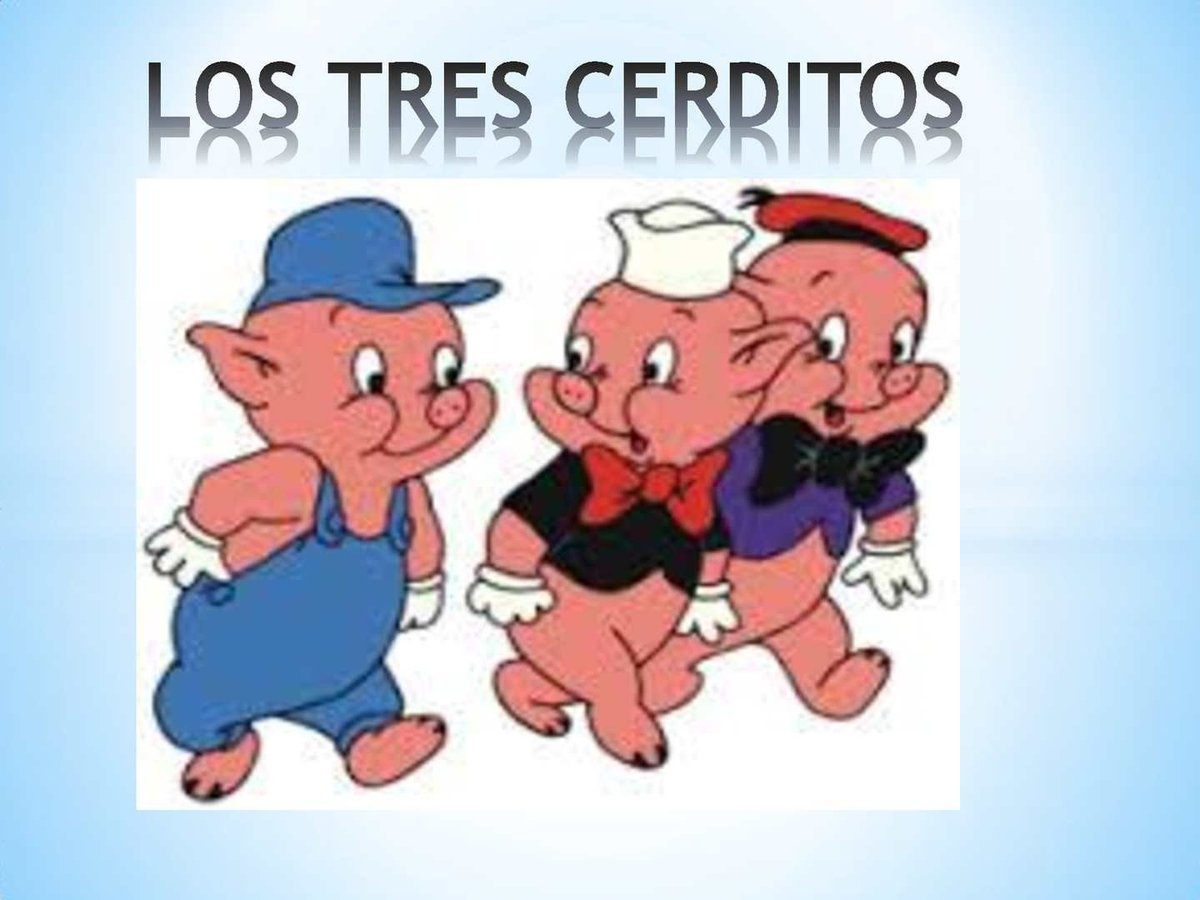
When you embark on the adventure of learning a new language, especially one as vibrant and widely spoken as Spanish, finding an accessible entry point can make all the difference. Imagine a bridge that connects your current linguistic understanding to a whole new world of words, built not with bricks or straw, but with the familiar narrative of a classic tale. That's precisely what Learning Spanish with Los Tres Cerditos offers: a delightful, highly effective, and deeply engaging pathway to mastering essential Spanish.
This isn't just about reading a story; it's about leveraging familiarity to accelerate comprehension, internalize grammar, and build a robust vocabulary. Forget dry textbooks and rote memorization; we're diving into a narrative you already know, turning it into your personal Spanish language lab.
At a Glance: Why "Los Tres Cerditos" is Your Spanish Learning Superpower
- Familiarity is Key: You know the plot, so cognitive load is reduced, letting you focus on the Spanish.
- Repetitive Vocabulary: The story uses core words and phrases again and again, reinforcing learning naturally.
- Action-Oriented Verbs: Learn common verbs in context, especially past tenses and commands.
- Simple Sentence Structures: Perfect for beginners to grasp basic Spanish syntax without overwhelm.
- Engaging Narrative: Stay motivated and entertained while building foundational language skills.
- Pronunciation Practice: Offers ample opportunity to practice sounds and intonation with a clear story arc.
- Cultural Bridge: Connects you to Spanish storytelling traditions through a globally recognized fable.
The Undeniable Power of Familiar Tales in Language Acquisition
We often assume that to truly learn a new language, we need entirely new material. But seasoned polyglots and language educators will tell you a different story: familiarity is a secret weapon. When you're not struggling to understand the plot, your brain is freed up to focus entirely on the language. This is the magic behind All about the three pigs as a learning tool.
Think about it: you already know that a mother pig has three piglets, that they build houses, and that a big bad wolf tries to huff and puff and blow them down. This narrative scaffolding allows you to immediately jump into the Spanish text without the frustration of constant dictionary look-ups or guessing complex plot points. Instead, every new Spanish word or phrase slots into a pre-existing mental framework, making retention dramatically easier and more intuitive.
It's like learning to drive in a car you've always admired versus one you've never seen before. The vehicle itself is new, but the mental map of driving is already there. With "Los Tres Cerditos," the story is the road map, and Spanish is the new car you're learning to navigate.
Deconstructing the Tale: Your Spanish Learning Toolkit
Let's break down how Los Tres Cerditos transforms from a children's story into a comprehensive language learning resource. We'll extract vocabulary, grammar points, and pronunciation challenges directly from the core narrative.
Essential Vocabulary: Building Your Foundation
The story, in its simplicity, is a treasure trove of high-frequency Spanish vocabulary. Here are some key terms you'll master:
- Characters:
mamá cerda(mother pig)tres cerditos(three little pigs)el gran lobo malo/feroz(the big bad/fierce wolf)- Materials for Houses:
paja(straw)madera(wood)ladrillos(bricks)- Key Objects:
casa(house)puerta(door)chimenea(chimney)olla de sopa caliente(pot of hot soup)- Verbs of Action:
tener(to have) - Una mamá cerda tenía tres cerditos.enviar(to send) - los envió al mundobuscar(to look for) - a buscar fortunapedir(to ask for) -pidiópaja/madera/ladrillosconstruir(to build) - y construyó una casallegar(to arrive) - El gran lobo malo llegóoler(to smell) - olió al cerditodesear(to desire/want) - y lo deseóexigir(to demand) - El lobo exigió que el cerdito abriera la puertaabrir(to open)ver(to see) - al ver las patas/nariz/orejas del lobonegarse(to refuse) - se negóamenazar(to threaten) - El lobo amenazósoplar(to blow) - con soplarderrumbar(to knock down/collapse) - y derrumbar la casacorrer(to run) - El cerdito corrióagotarse(to get exhausted) - y se agotórendirse(to give up) - sin rendirsesubir(to go up) - subió al techodeslizarse(to slide down) - se deslizó por la chimeneacaer(to fall) - cayendo directamente en la ollaaullar(to howl) -Aullandosaltar(to jump) - el lobo saltóhuir(to flee) - y huyó de la casaagarrarse(to grab onto oneself) - agarrándose el trasero quemadollamar(to call) - El cerdito llamó a su madre y hermanosinvitar(to invite) -invitándolosa compartir una cenaresultar(to turn out) - La sopa resultó tan popularatrapar(to catch) - quería atrapar al lobovivir(to live) - para vivir en paz- Adjectives/Adverbs:
suficiente(enough) - no haber suficiente comidacaliente(hot) - sopa calientequemado(burnt) - trasero quemadopopular(popular)profundo y oscuro(deep and dark) - bosque profundo y oscuro- Prepositions & Direction:
al sur(to the south)al norte(to the north)al oeste(to the west)de vuelta a(back to)en(in/on)por(through/by)para(for/in order to)
Grammar in Action: Seeing Structures Unfold
The narrative naturally showcases fundamental Spanish grammar points. Pay close attention to these as you read:
1. The Preterite and Imperfect Tenses
The story is a masterclass in narrative past tenses.
- Imperfect (
Imperfecto): Used for descriptions, ongoing actions in the past, or habitual actions. - Una mamá cerda tenía tres cerditos... (She had three piglets – a description of a state)
- ...al no haber suficiente comida para alimentarlos... (as there wasn't enough food – an ongoing condition)
- Preterite (
Pretérito): Used for completed actions in the past, specific events with a clear beginning and end. - El primer cerdito fue al sur... (He went to the south – a completed action)
- ...construyó una casa... (He built a house – a completed action)
- El lobo amenazó... (The wolf threatened – a specific event)
- ...lo cual hizo. (which he did – a specific action)
- El cerdito corrió de vuelta a la casa de su madre. (The piglet ran back – a completed action)
Notice how the story seamlessly weaves these tenses: describing the scene with the imperfect, then moving the plot forward with the preterite. This is a crucial distinction for Spanish learners.
2. Subjunctive Mood for Demands and Wishes
When the wolf demands something, or when someone wishes for an outcome, the subjunctive often appears.
- El lobo exigió que el cerdito abriera la puerta... (The wolf demanded that the piglet open the door.) - Abrir is in the imperfect subjunctive. This structure (verb of demand/wish +
que+ subjunctive) is very common.
3. Basic Sentence Structure
Spanish often follows an SVO (Subject-Verb-Object) pattern, similar to English, but with more flexibility.
- El primer cerdito (S) fue (V) al sur (Adv. Phrase).
- El lobo (S) olió (V) al cerdito (O).
4. Infinitives and Gerunds
- Infinitives (
-ar,-er,-ir): - ...al no haber suficiente comida para alimentarlos... (to feed them)
- ...a buscar fortuna. (to seek fortune)
- ...con soplar y derrumbar la casa. (to blow and knock down the house)
- Gerunds (
-ando,-iendo): Expressing ongoing actions, often translated with "-ing". Aullando, el lobo saltó... (Howling, the wolf jumped...)cayendodirectamente en la olla... (falling directly into the pot...)agarrándoseel trasero quemado. (grabbing his burnt backside.)invitándolosa compartir una cena... (inviting them to share a dinner...)
5. Prepositions of Place and Direction
The story uses simple prepositions to indicate movement and location:
al sur,al norte,al oeste(to the south/north/west)en la olla(in the pot)por la chimenea(through the chimney)de vuelta a la casa(back to the house)
Pronunciation Power-Ups: Mastering Spanish Sounds
Reading Los Tres Cerditos aloud is an excellent way to practice Spanish pronunciation. Pay attention to:
- Vowel Sounds: Spanish vowels (
a, e, i, o, u) are pure and consistent. Practice making them short and crisp. - The "R" Sound:
- Single 'r' (
cerdito,madera): a soft flap, similar to the 'dd' in "ladder." - Double 'rr' (
derrumba,corrió): a rolled 'r' sound. - The "L" and "LL" Sounds:
- 'L' (
lobo,ladrillos): similar to English 'l'. - 'LL' (
llegó,olla,aullando): in most Latin American Spanish, it sounds like the 'y' in "yes." In parts of Spain and other regions, it can sound like 'j' in "jump" or 'sh' in "shell." Choose one and be consistent. - Silent "H": Remember, the 'h' in Spanish (
había,hizo,huir) is always silent. - The "Z" and "C" (before e/i): In Latin America, these sound like 's'. In parts of Spain, they sound like 'th' in "think."
- Intonation and Rhythm: Spanish sentences often have a consistent rhythm. Read sentences in chunks, paying attention to natural pauses.
Your Step-by-Step Learning Journey with Los Tres Cerditos
Now that you understand the linguistic potential of this classic tale, let's outline a concrete strategy to maximize your learning. This isn't a one-and-done exercise; it's a multi-layered approach designed for deep immersion.
Step 1: First Read-Through: Immersion & Intuition
Goal: Get the gist, enjoy the story, and build confidence.
How:
- Find the Spanish Text: Use the provided context research as your base.
- Read without a Dictionary (Initially): Try to understand as much as you can from context and your prior knowledge of the story. Don't stop to look up every word.
- Read Aloud: Even if you're unsure of pronunciation, make an attempt. This engages different parts of your brain.
- Listen (if possible): If you can find an audio version of Los Tres Cerditos in Spanish, listen along while reading. This is invaluable for pronunciation and intonation. Many free resources offer narrated children's stories.
Self-check: Did you broadly understand what happened in each paragraph? Great! You don't need perfect comprehension yet.
Step 2: Sentence by Sentence: Dissect & Understand
Goal: Understand the meaning of every sentence.
How:
- Re-read, Sentence by Sentence: This time, actively break down each sentence.
- Highlight Unknown Words/Phrases: Use a highlighter or a digital tool.
- Use a Dictionary (Wisely): Look up words, but also pay attention to how they're used in context. A good bilingual dictionary or an online tool like WordReference.com can be helpful.
- Translate Mentally (or jot down notes): For complex sentences, translate them into English to ensure full understanding.
- Identify Key Nouns and Verbs: What are the subjects doing? What are the main objects?
Example from the text:Una mamá cerda tenía tres cerditos, pero al no haber suficiente comida para alimentarlos, los envió al mundo a buscar fortuna.
Una mamá cerda: A mother pig (simple noun phrase)tenía: had (imperfect of tener)tres cerditos: three little pigspero: butal no haber suficiente comida: as there wasn't enough food (idiomatic phrase,al + infinitiveoften means "upon [doing something]" or "when/as [doing something]")para alimentarlos: to feed them (para+ infinitive,losis a direct object pronoun)los envió: sent them (preterite of enviar)al mundo: to the worlda buscar fortuna: to seek fortune (a + infinitiveoften indicates purpose)
Step 3: Vocabulary Deep Dive: Build Your Word Bank
Goal: Actively learn and retain new vocabulary.
How:
- Create Flashcards: For every new word or useful phrase you highlighted in Step 2, create a flashcard. Include:
- Spanish word/phrase
- English translation
- Sentence from the story where it appears (context is crucial!)
- Example sentence of your own.
- Use Spaced Repetition (SRS): Apps like Anki or Quizlet are excellent for this. They show you words just before you're about to forget them, optimizing retention.
- Categorize Vocabulary: Group words by theme (characters, actions, materials, directions). This helps your brain create connections.
Step 4: Grammar Spotlight: Identify & Apply
Goal: Understand the grammatical structures in action and how they function.
How:
- Re-read with a Grammar Lens: Focus specifically on one grammar point at a time (e.g., all instances of the preterite, then all instances of the imperfect).
- Underline/Highlight Examples: Mark every time you see a target grammar point.
- Consult a Grammar Guide: If a structure confuses you, refer to a simple Spanish grammar guide. Don't get bogged down in theory; just enough to understand the example in the story.
- Create Your Own Sentences: Try to construct new sentences using the grammar patterns you've identified, perhaps changing details of the story.
Example: Look for all instances ofpedir(to ask for) in the preterite:
pidió paja(he asked for straw)pidió madera(he asked for wood)pidió ladrillos(he asked for bricks)
Notice the pattern:pidió+ direct object.
Step 5: Listen & Mimic: Pronunciation Practice
Goal: Improve your speaking and listening comprehension.
How:
- Find an Audio Version: Search for "Los Tres Cerditos audiolibro" or "cuento Los Tres Cerditos narrado" on YouTube or children's story apps.
- Shadowing: Listen to a sentence, pause, and try to repeat it exactly as you heard it, matching intonation, rhythm, and speed.
- Record Yourself: Read a paragraph of the story aloud and record it. Then, compare it to a native speaker's recording. This can be eye-opening for identifying areas to improve.
- Focus on Tricky Sounds: Dedicate extra practice to those 'r' rolls, 'll' sounds, and consistent vowel pronunciations.
Step 6: Retell the Story: Active Recall & Production
Goal: Move from passive understanding to active Spanish production.
How:
- Summarize in Spanish (Verbally): Tell the story aloud in your own words. Start with simple sentences and gradually add more detail.
- Write a Summary: Write a brief summary of the story in Spanish. This forces you to retrieve vocabulary and apply grammar rules consciously.
- Answer Questions about the Story: Ask yourself questions like:
- ¿Qué construyó el primer cerdito? (What did the first piglet build?)
- ¿Por qué no pudo el lobo derrumbar la casa de ladrillos? (Why couldn't the wolf knock down the brick house?)
- ¿Qué le pasó al lobo al final? (What happened to the wolf at the end?)
- Then, answer them in Spanish.
This step is critical because it forces you to use the language creatively, moving beyond just recognition.
Step 7: Translate & Adapt: Creative Expansion
Goal: Flex your Spanish muscles by manipulating the story.
How:
- Change Details: What if the pigs built their houses with different materials (e.g.,
helado- ice cream,algodón- cotton)? What if the wolf was azorro(fox) or aoso(bear)? - Write a Different Ending: How else could the story have concluded?
- Role-Play: If you have a language partner, take on the roles of the pigs and the wolf and act out scenes.
- Create a Mini-Dialogue: Imagine a conversation between two pigs after the wolf incident.
This creative application solidifies your understanding and makes the language truly your own.
Beyond the Basics: Advanced Strategies for the Determined Learner
Once you've thoroughly worked through Los Tres Cerditos, you're not done. This story can continue to serve as a launchpad for more advanced learning.
Explore Cultural Variations and Nuances
While "The Three Little Pigs" is universally known, different cultures (and even different Spanish-speaking regions) might have slightly varied versions or traditional retellings.
- Research other Spanish fables or children's stories. How do they compare in terms of vocabulary and themes?
- Discuss the moral of the story: What deeper lessons does Los Tres Cerditos teach? How do these resonate in Spanish culture? The industriousness of the third pig and the consequences for the lazy ones are common themes in many traditional narratives worldwide.
Integrate with Other Resources
Don't let Los Tres Cerditos be your only resource. Think of it as a gateway.
- Pair with language learning apps: Use Duolingo, Babbel, or Memrise to supplement your vocabulary and grammar.
- Find a tutor or language exchange partner: Practice retelling the story or discussing its themes with a native speaker. They can offer corrections and insights that a book cannot.
- Watch animated versions: Search for "Los Tres Cerditos dibujos animados" on YouTube to hear the story naturally spoken and see the actions unfold. This visual context can enhance understanding.
Common Pitfalls & How to Avoid Them
Even with an excellent resource like Los Tres Cerditos, learners can fall into traps. Be mindful of these to keep your progress steady.
Over-Reliance on Direct Translation
While useful in Step 2, don't make it a habit for every word. Spanish and English don't always map perfectly word-for-word. Try to understand phrases and sentences as units, especially common idioms. For instance, al no haber suficiente comida is best understood as "as there wasn't enough food" rather than a literal translation of each component.
Getting Bogged Down in Every Single Word
It's okay not to know every single noun or adjective on your first pass. Focus on the high-frequency words and critical verbs that drive the narrative. The goal is comprehension and consistent exposure, not perfect memorization of every obscure term right away.
Not Practicing Active Recall
Simply reading or listening isn't enough. You need to actively retrieve information from your brain. This means summarizing, translating into Spanish, and answering questions in Spanish. If you skip Step 6, you're missing out on a huge chunk of potential learning.
Ignoring Pronunciation
It's tempting to focus solely on reading and understanding, but speaking and listening are equally vital. Make time for shadowing, recording yourself, and practicing those tricky Spanish sounds. Good pronunciation builds confidence and makes you more easily understood.
Not Re-visiting the Story
Like a good friend, the story offers new insights each time you engage with it. Re-read it in a month or two. You'll be amazed at how much more you understand and how fluent your reading has become. Repetition is a core tenet of language mastery.
FAQs for the Aspiring Spanish Speaker
Let's address some common questions that might pop up as you use Los Tres Cerditos to learn Spanish.
Is "Los Tres Cerditos" too childish for adult learners?
Absolutely not! Children's stories are ideal for adult beginners because they provide simplified language, repetitive structures, and universal themes. The cognitive load is low, allowing you to focus on the mechanics of the language without struggling with complex plotlines or abstract concepts. Many language teachers advocate starting with materials designed for young native speakers.
How long should I spend on this single story?
There's no fixed timeline. You should spend as long as it remains beneficial and engaging for you.
- Beginners: Might spend a few weeks or even a month, cycling through all seven steps multiple times.
- Intermediate learners: Could use it as a refresher or a quick way to practice active recall and creative adaptation in a few days.
The key is to move on when you feel you've extracted most of the learning value from it, but don't hesitate to revisit it periodically.
Where can I find other simple Spanish stories or resources like this?
Once you've mastered Los Tres Cerditos, you can branch out!
- Classic Fables: Look for other well-known fables translated into Spanish, such as
La liebre y la tortuga(The Hare and the Tortoise),El león y el ratón(The Lion and the Mouse), orCaperucita Roja(Little Red Riding Hood). - Children's Books: Visit the children's section of your local library or online bookstores for Spanish picture books.
- Language Learning Apps: Many apps have story sections tailored to different levels.
- "Easy Spanish" Podcasts/YouTube Channels: Look for content specifically designed for learners, often spoken at a slower pace.
The Power of Repetition: Making the Story Stick
The beauty of Los Tres Cerditos as a learning tool lies significantly in its inherent repetition. The narrative structure, where the first two pigs build houses and encounter the wolf with similar, escalating outcomes, reinforces key vocabulary and phrases. Soplaré y soplaré y tu casa derrumbaré (I'll huff and I'll puff and I'll blow your house down) becomes ingrained not through forced memorization, but through its natural recurrence.
This kind of repeated exposure to words, verb conjugations, and sentence patterns within a meaningful context is far more effective than isolated drills. Your brain begins to recognize patterns, anticipating what comes next, which is a hallmark of true language fluency. Embrace the repetition; it's your friend in this learning journey.
Your Next Steps on the Spanish Journey
Congratulations! By diligently working through Los Tres Cerditos, you're not just learning vocabulary; you're developing foundational reading comprehension, bolstering your listening skills, and building the confidence to speak. This familiar tale provides a robust, empathetic entry point into the Spanish language, proving that learning can be both effective and enjoyable.
Keep building on this momentum. Explore more children's stories, listen to beginner-level podcasts, or start simple conversations with a language partner. Remember, language acquisition is a marathon, not a sprint, and every familiar story you conquer moves you closer to fluency. So, grab another cuento (story) and continue your remarkable journey into the world of Spanish!